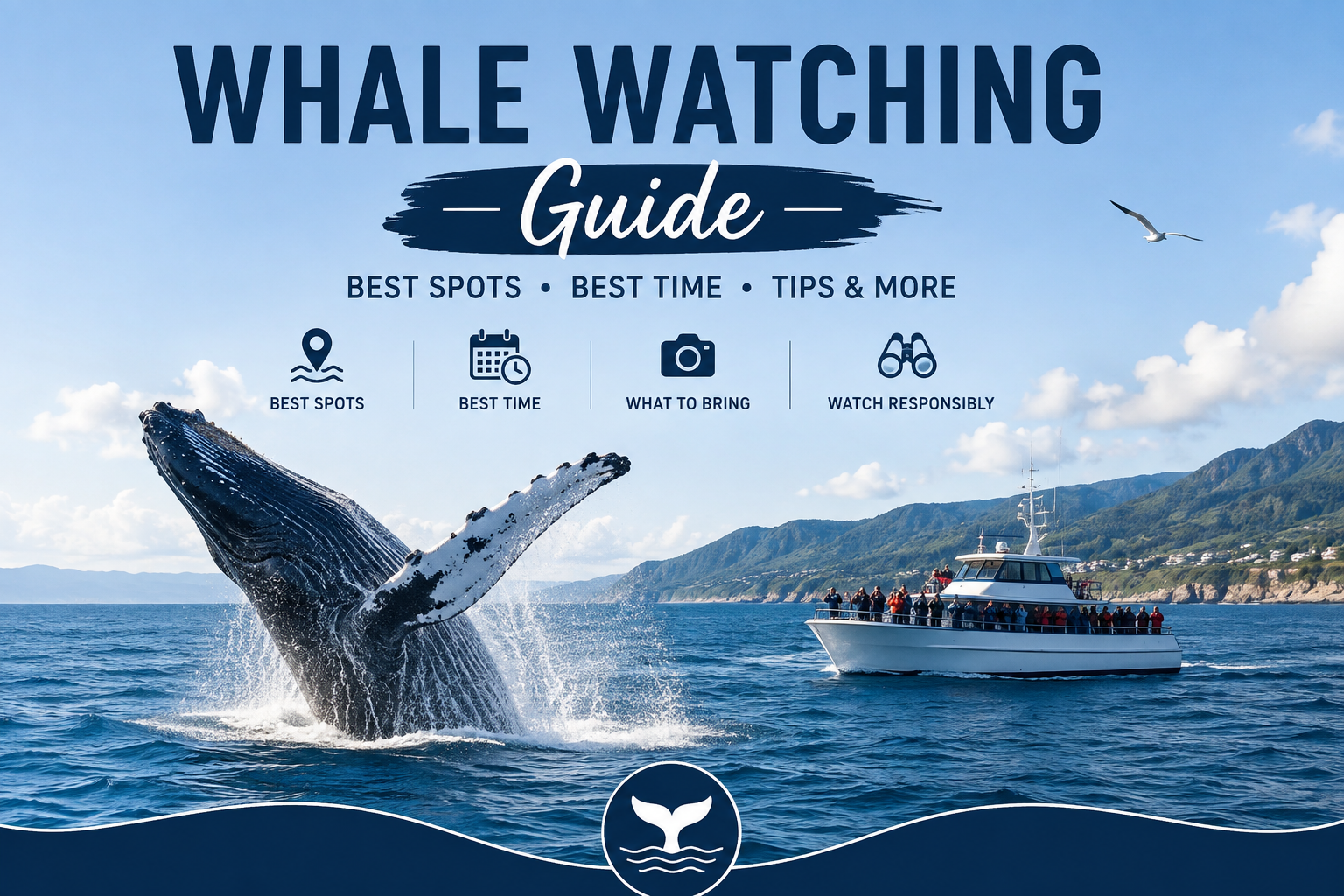
Puerto Vallarta gets a lot of love for its beaches and easy holiday vibe, but if you show up in the winter, there's a second show in town: humpback whales. Every year, these massive animals swim into the warm, sheltered waters of Banderas Bay to mate, give birth, and raise their calves before heading back north.
If you're staying nearby — say, at Molino de Agua — you don't have to go far to see them. Banderas Bay sits right at the edge of town, which is part of why this stretch of coast has become such a popular spot for watching whales in the wild.
This Whale Watching Guide walks through the best time to go, how to pick a decent tour, what to pack, and a few things first-timers usually don't think to ask about.
Why Whale Watching in Puerto Vallarta Is Worth It
Banderas Bay is one of the more reliable places in Mexico to see humpbacks up close. They arrive after a long swim from colder feeding grounds up north, and once they're here, the bay's calm, protected waters give mothers a safe place to nurse and raise their young before the trip back begins.
What you'll actually see depends on the day. Sometimes it's a full breach — the whale hurling most of its body out of the water. Other times it's just a tail slap, a fin, or a quiet surface-and-dive. These are wild animals, not performers on a schedule, so no two trips look the same. That unpredictability is honestly part of the appeal.
1. Best Time for Whale Watching
The season generally runs from December through March, though a few whales tend to show up early and some linger into spring.
- December — the season is just getting going, but numbers pick up fast. It's a good time to combine whale watching with regular sightseeing.
- January & February — this is peak activity. If seeing a breach is the whole point of your trip, book for these months.
- March — activity slows a bit, but mother-and-calf sightings are often at their best, since young whales need extra time before the northward migration.
Bottom line: any month between December and March works, but January and February give you the best odds.
2. Choosing Whale Watching Tours
For families planning a Puerto Vallarta holiday, choosing the right accommodation can make the entire trip more comfortable. Why Families Choose Condo 803 often comes down to having the space, amenities and convenience needed for a relaxing family stay.
Before booking, check for:
- Guides who actually know whale behavior, not just boat operators
- Reasonable group sizes (packed boats make for worse sightings)
- Clear info on where and when the tour departs
- Honest reviews, not just a polished website
- A stated policy against chasing or crowding whales
Any operator that encourages getting unnecessarily close, or worse, touching a whale, isn't one worth your money. The better companies also spend a few minutes explaining whale behaviour and local conservation — it adds a lot to the experience.
3. Planning a Whale Watching Vacation
A whale-watching trip doesn't need to be just one boat ride and nothing else. Puerto Vallarta gives you plenty to fill the rest of the week — beaches, food, the Malecón — so it's worth thinking about where you'll actually stay.
Molino de Agua Condo 803 works well for this. It sleeps up to six across three bedrooms and three bathrooms:
- Master bedroom, king bed
- Bedroom 2, king bed
- Bedroom 3, queen bed
There's a full kitchen, washer and dryer, A/C, free Wi-Fi, a private balcony with ocean and garden views, pool access, and parking. After a morning out on the water, having a real kitchen and a washer on hand makes a longer stay a lot easier — especially traveling with family. Gated entry and concierge service round things out.
4. How to Go Whale Watching, Step by Step
Pick your dates. If whales are the priority, aim for December through March.
Research operators. Look past the marketing and check what's actually included, plus how they talk about wildlife safety.
Match the boat to your group. Families often do better on larger, steadier boats. Couples or smaller groups might prefer something more intimate.
Book ahead. January and February are popular for a reason — both for whales and for tourists. Don't wait until the week of.
Pack right. Sun protection, sunglasses, a light jacket (it's cooler on the water than it looks), water, comfortable clothes, a camera, and motion-sickness meds if you're prone to it. A dry bag for your phone isn't a bad idea either.
Read more – Luxury Vacation Rentals in Puerto Vallarta
5. Practical Whale Watching Tips
A few things that make a real difference once you're actually out there:
- Go in the morning. Water's usually calmer, and sightings tend to be better before the wind picks up.
- Be patient. You might wait 20 minutes between sightings. That's normal, not a bad tour.
- Bring binoculars. Whales surface further away than you'd think.
- Don't skip the sunscreen. Winter sun on open water is stronger than it feels.
- Listen to your guide. They can often read the signs of a whale about to surface before you can.
- Keep your distance. Don't push the captain to get closer than they're comfortable with — it's not worth stressing the animal.
Whale Watching for Beginners
If this is your first time doing anything like this, don't stress about knowing what to look for. Most of what you'll notice at first is subtle: a puff of spray, a dark shape near the surface, and birds circling a patch of water. Sometimes a whale appears and vanishes in seconds — blink and you'll miss it.
Keep an eye out for:
- A blow (spray) above the surface
- A dark back or dorsal fin
- A tail lifting before a dive
- Sudden splashing
- Seabirds gathering, which often signals activity below
A good guide narrates most of this for you, which helps a lot the first time around.
What You Might Actually See
Breaching — the whale launches most of its body clear of the water. It's rare enough to feel like winning the lottery when it happens right in front of you.
Tail slapping — a hard smack of the tail against the surface, loud and visible from a distance.
Pectoral fin slapping — humpbacks have unusually long fins, and they'll sometimes slap them against the water almost casually.
Surfacing and diving — less dramatic, but honestly one of the calmer, more moving parts of a trip: just watching a whale breathe and slip back under.
Mothers and calves — especially common by March, and easily one of the more touching things you'll see out there.
Responsible Whale Watching Matters
Whales are protected, and boats are expected to keep respectful distances and follow local wildlife regulations. Choosing a certified operator isn't just a box to check — it genuinely affects how the whales behave and how good your sightings are.
Look for operators that:
- Follow the rules instead of bending them for a better photo.
- Never chase or corner whales.
- Educate passengers instead of just driving around.
- Put safety, both yours and the whales', first.
Ironically, the more respectful tours often end up being the better ones — the whales are calmer, and you get to see more natural behaviour instead of a spooked animal trying to get away.
Frequently Asked Questions
What's the best month for whale watching in Puerto Vallarta? January and February, hands down, if activity is what you're after.
When does the season run? December through March, generally, with some flexibility on either end depending on the year.
Are sightings guaranteed? No — they're wild animals. Any operator promising a guaranteed breach is overselling it.
Is it good for families? Yes, though, it's worth checking a tour's age minimums and safety setup before booking.
What should I bring? Sun protection, water, a light jacket, comfortable clothes, and a camera. Motion-sickness meds if you need them.
Final Thoughts
Puerto Vallarta in winter is about more than the beaches. Banderas Bay turns into one of the better places on the Pacific coast to watch humpback whales doing what they actually do in the wild — not a show, just real behavior, which is what makes it worth the trip.
Pick your dates around January or February if you can, go with an operator that actually respects the animals, and pack for a few hours on open water. That's really most of it.
This Whale Watching Guide also comes back to something easy to overlook: where you stay shapes the whole trip. A comfortable, well-equipped place to land after a morning on the water makes the rest of your vacation better too.
